Discover The World Of Carpenter Ants
Explore and learn about the ecology, diversity, and mystery of Carpenter Ants.
Using advanced, eco-friendly pest control methods, our expert team delivers effective carpenter ant treatment that eliminates infestations while protecting your home and ensuring the safety of your family and pets.
Carpenter Ants a Problem? Click Here
Our expert team uses cutting-edge, eco-friendly pest control solutions to deliver highly effective carpenter ant treatment. We eliminate infestations at the source while safeguarding your home’s structure and ensuring the well-being of your family and pets.
Prevention involves eliminating moisture sources, removing decaying wood, and sealing entry points to deter carpenter ants from entering.
Prevention Tips
What are Carpenter Ants?
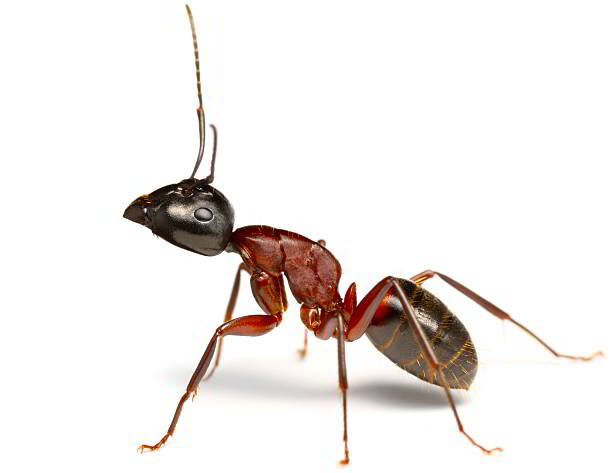
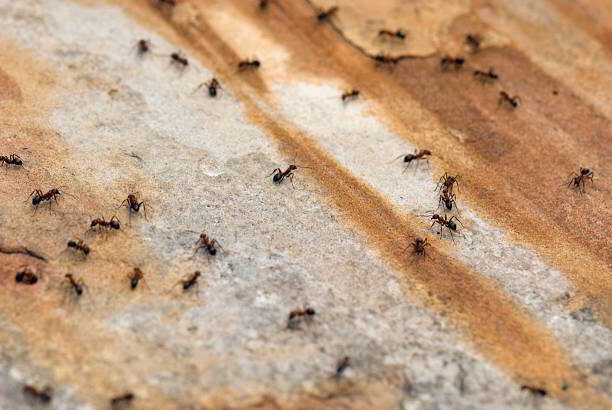
Carpenter ants are large, destructive pests that frequently invade homes and yards in search of food and shelter. While their coloration may vary, most carpenter ants are black and easily identified by their size and appearance. Winged carpenter ants often seen indoors or near exterior walls are reproductive swarmer that emerge in spring. These ant swarms signal the presence of an established colony nearby and indicate the potential for rapid expansion if left untreated.
Named for their habit of nesting in wood, carpenter ants hollow out wooden structures to build intricate galleries for their colonies. While they prefer moist, decaying wood, they are also known to infest dry structural wood found inside homes. Unlike termites, carpenter ants do not consume the wood they tunnel through; instead, they excavate it to create nesting space. This behavior can lead to significant structural damage over time, especially if infestations go unnoticed.
Are Carpenter Ants dangerous?
Carpenter ants are considered dangerous household pests because of the structural damage they can cause while nesting inside walls, beams, and other wooden elements. In addition to weakening your home’s framework, foraging carpenter ants like other ant species can spread bacteria across countertops, food storage areas, and other surfaces, contaminating your living space. If you notice large, black ants appearing inside or around your home, especially in spring or near wood sources, it’s crucial to act quickly. Contact a professional pest control expert to prevent further damage and eliminate the infestation before it worsens.
Why do I have a Carpenter Ant problem?
Carpenter ants typically establish their primary colony outdoors, but homes located near these nests are at high risk of intrusion. While foraging for food, carpenter ants often find their way indoors and if conditions are favorable, they’ll stay. It’s common for them to build a satellite nest inside the structure, especially near newly discovered food sources. These secondary nests are often established in wood that has been weakened by moisture. Carpenter ants are drawn to water-damaged wood because it’s easier to excavate, allowing them to carve out tunnels and nesting galleries with less resistance.
Where will I find Carpenter Ants?
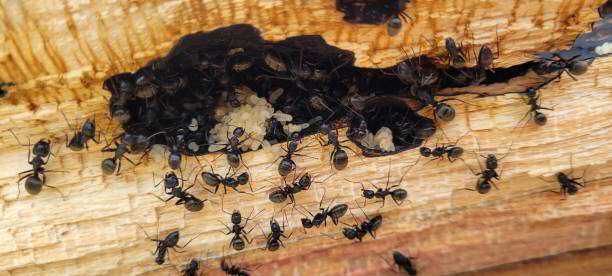
If you’re spotting large black ants in your yard, garden, along sidewalks, or near your deck, it’s a strong sign that a carpenter ant nest is nearby. Outdoors, these ants commonly establish colonies in damp areas such as fallen logs, tree stumps, and landscaping timbers. However, if they make their way inside your home, they typically target areas with ongoing moisture issues. Carpenter ants often build indoor satellite nests behind walls or beneath floors in places like kitchens and bathrooms especially near leaky dishwashers, sinks, washing machines, or tubs. These high-humidity zones provide the soft, water-damaged wood that carpenter ants prefer for nesting.
Learn more about Ant Control
How do I get rid of Carpenter Ants?
Eliminating carpenter ants from your yard, home, or business is a task best handled by trained professionals. At AMCO Pest Solutions, we offer year-round carpenter ant control designed to eliminate active infestations and prevent future ant problems from returning. Whether you’re currently dealing with a carpenter ant invasion or want to safeguard your property from potential damage, our family-owned and operated team is ready to help with customized, long-term solutions.
Our licensed experts are committed to delivering reliable pest control services that protect both residential and commercial properties from carpenter ants and other destructive pests. AMCO Pest Solutions proudly serves clients throughout New Jersey, the Five Boroughs of New York City, and South Florida. Contact us today to learn more about our targeted carpenter ant extermination programs and discover why so many homeowners and business owners trust us to keep their spaces pest-free year-round.
Learn more about Residential Control
Carpenter Ant Behavior and Adaptation
Carpenter ants are highly adaptable pests, best known for their ability to excavate wood and create extensive nesting galleries. Their preference for moist or decaying wood often points to underlying moisture issues within a structure. While their tunneling behavior can lead to serious structural damage, it also highlights their efficiency in establishing and expanding colonies in a variety of environments. From natural wooded areas to modern homes, carpenter ants demonstrate impressive survival strategies, making them one of the most persistent and challenging pests to control in both rural and urban settings.
Lifecycle and Reproduction
The life cycle of carpenter ants includes four key stages: egg, larva, pupa, and adult. Queens lay their eggs in damp or decaying wood, allowing colonies to grow undetected within walls, beams, and other structural components for years. This slow but steady reproductive process enables carpenter ants to build large, concealed colonies that can cause extensive damage over time. Their ability to remain hidden highlights the need for early detection and proactive pest management to minimize costly structural repairs and protect your home or business from long-term infestation.
Carpenter Ants and Their Role in Ecosystems
Carpenter ants serve an important ecological function in forested environments by helping to break down dead and decaying trees, thus supporting nutrient cycling and soil health. However, when these ants transition into urban areas, their natural nesting behavior becomes problematic. By tunneling into wooden structures, they can compromise the integrity of homes and buildings. This dual role highlights the need to balance their environmental benefits with effective pest control strategies to mitigate the structural risks they pose in human habitats.
Managing Carpenter Ant Populations
Effective carpenter ant control begins with addressing the conditions that attract them namely, excess moisture and decaying wood. Identifying and eliminating moisture sources, sealing exterior entry points, and removing rotting wood near the foundation are crucial first steps in preventing infestation. In cases of severe or recurring problems, professional pest control services may be required to eliminate the colony at its source, particularly by targeting the queen. Early detection, combined with strategic intervention and preventive maintenance, is essential for minimizing carpenter ant damage and preserving the structural integrity of your home or business.
Carpenter ants are more than a nuisance they’re wood-damaging pests that can seriously compromise the structural integrity of your home or business. These destructive ants tunnel through wooden beams and framing to create nests, leading to costly repairs if left untreated. At Amco Pest Solutions, we specialize in comprehensive carpenter ant control services that quickly identify and eliminate infestations using safe, eco-friendly methods. Our skilled technicians target ants at every stage of their life cycle to stop the spread and prevent future damage. With customized treatment plans and 24/7 emergency response, Amco Pest Solutions is your trusted partner for protecting your property year-round. Don’t wait until the damage is done contact us today to stop carpenter ants in their tracks.
How can I prevent Carpenter Ants in the future?
Eliminate Moisture Sources
Carpenter ants are highly attracted to moisture-damaged or decaying wood, making damp areas of your home prime nesting sites. To prevent infestations, it’s essential to repair leaks, address plumbing issues promptly, and ensure proper ventilation in crawl spaces, bathrooms, and kitchens. By eliminating excess moisture, you significantly reduce the likelihood of attracting carpenter ants and protect your home’s wooden structures from potential damage.
Seal Entry Points
Conduct a thorough inspection of your home’s exterior and seal any cracks, gaps, or openings that could serve as entry points for carpenter ants. Pay special attention to areas where utility lines, pipes, or cables enter the structure these are common access routes for pests. Use high-quality materials such as caulk, weather stripping, or foam sealant to close off vulnerable spots and reinforce your home’s defenses against infestation. Proper sealing is a key step in effective carpenter ant prevention.
Trim Trees and Shrubs
Carpenter ants frequently use tree branches, shrubs, and other vegetation as natural bridges to access homes and buildings. To minimize the risk of infestation, regularly trim trees, bushes, and overhanging branches that come into contact with your roof, siding, or gutters. Keeping vegetation well-maintained reduces direct access points and serves as an effective barrier against carpenter ants and other pests trying to enter your structure.
Store Firewood Away
To reduce the risk of carpenter ant infestations, store firewood, lumber, and other wood materials away from your home and elevate them off the ground. Carpenter ants commonly nest in stacked wood piles, and placing them too close to your structure makes it easier for ants to migrate indoors. Proper storage not only protects your firewood but also helps prevent these destructive pests from invading your home.
Regular Inspections
For effective mouse control, strategically place traps along walls, in corners, and near areas where rodent activity is most noticeable. Choose from humane traps or traditional snap traps baited with peanut butter, cheese, or other attractants to increase capture rates. Be sure to check traps frequently and reset them as needed to maintain their effectiveness and ensure successful mouse removal.
Professional Inspection
Scheduling routine professional pest inspections is one of the most effective ways to prevent carpenter ant infestations. Licensed pest control experts are trained to detect the early warning signs of carpenter ant activity, even in hidden or hard-to-reach areas. They can recommend customized treatment plans, apply insecticides strategically, and identify environmental conditions that attract these wood-damaging pests. Regular inspections not only stop infestations before they escalate but also provide year-round protection and peace of mind for homeowners and businesses alike.
Discover More Pests & Rodents Below!
Carpenter Ants Demystified: Quick Insights with Amco Pest Solutions
Join us for a rapid exploration into the world of carpenter ants! Discover the habits, risks, and effective solutions to keep these destructive ants away from your home. Get quick tips on identification and proactive measures. Watch now for essential insights into dealing with carpenter ants with Amco Pest Solutions!
Learn more about Ant Control